
 Available in US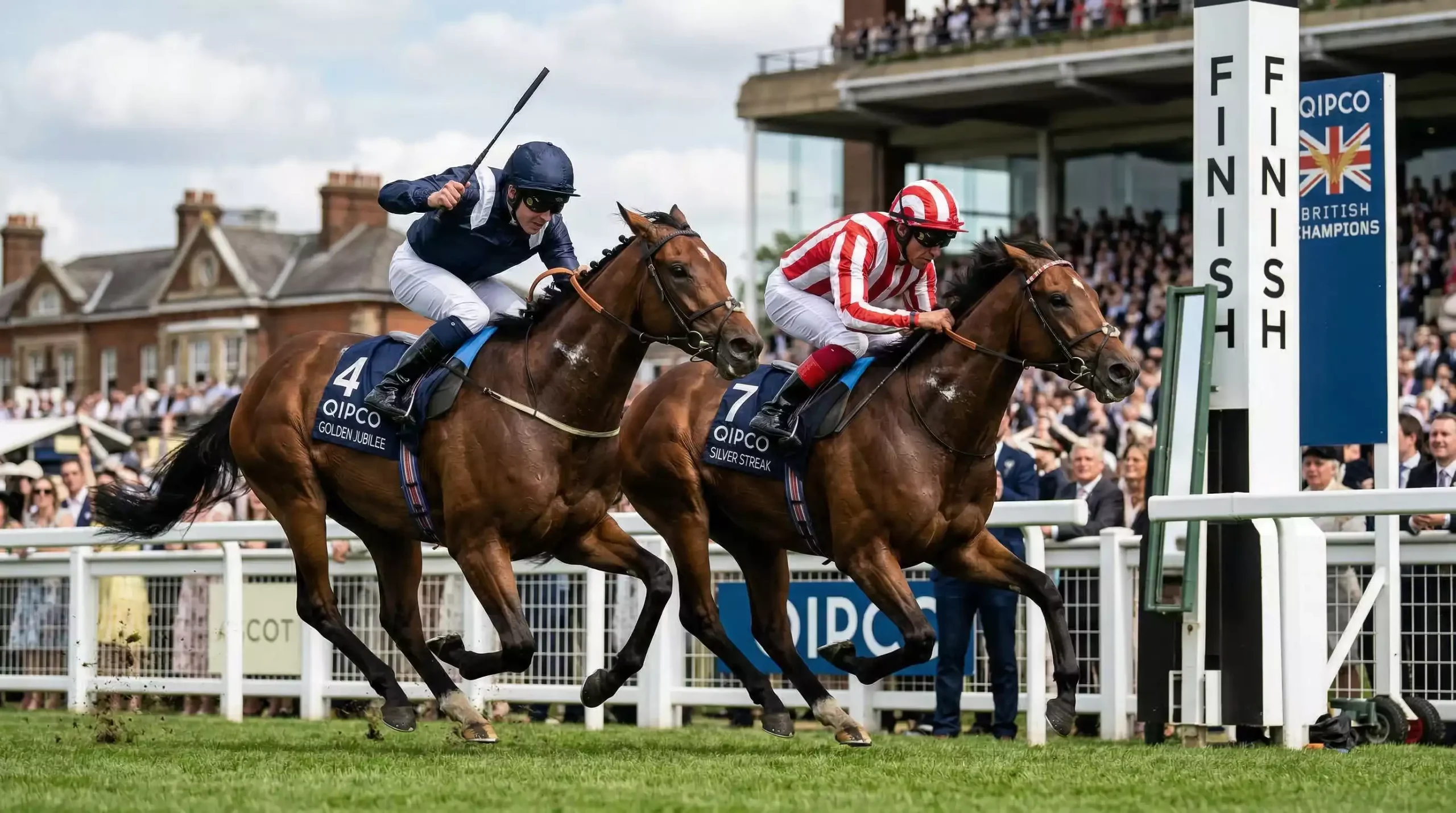
Forecast betting challenges you to predict the order of finish beyond simply picking a winner. A straight forecast requires selecting first and second in exact order. A reverse forecast covers both possible orders. Combination forecasts extend this principle to multiple selections. The additional difficulty commands larger returns when you succeed.
The appeal of forecast betting lies in predicting the order of finish, transforming race analysis from identifying winners into mapping competitive relationships. You assess not just which horse is best, but which horse is second best, and whether the favourite will definitely beat specific rivals.
Betting contributes approximately £350 million annually to British racing through various channels according to the BHA, while prize money reached £166.2 million in 2024. Within this substantial ecosystem, forecast markets attract punters seeking enhanced returns from their form analysis. Successfully predicting the first two home in correct order demonstrates analytical skill that standard win betting does not capture.
Forecast Bet Calculator — More on this topic at horse racing bet calculator.
Types of Forecast Bets
Straight forecast: Select first and second in exact order. Horse A must win with Horse B second. If they finish in any other order, including reversed, the bet loses. This is the purest forecast form with highest potential returns.
Reverse forecast: Select two horses to finish first and second in either order. Horse A first and Horse B second wins. Horse B first and Horse A second also wins. This flexibility costs double stake (two straight forecasts) but accommodates uncertainty about which selection edges the other.
Combination forecast: Select three or more horses to finish first and second. All possible first-second combinations are covered. Three selections produce six combinations (6 unit stake). Four selections produce twelve combinations. Stakes multiply rapidly as selections increase.
Computer Straight Forecast (CSF): Dividend calculated by a formula based on starting prices rather than fixed beforehand. You do not know exact returns until the race finishes. CSF payouts depend on the prices of your selections and the overall market structure.
Exacta: The tote pool equivalent of a forecast. You back first and second in order against other punters contributing to the pool. Returns depend on pool size and how many winners share the dividend. Exacta can produce better or worse returns than bookmaker forecasts depending on pool composition.
How Forecasts Are Calculated
Computer Straight Forecast returns use a formula incorporating the starting prices of first and second. The calculation considers both horses’ individual odds and the overall market structure. You cannot know exact returns until official SPs are declared after the race.
The CSF formula produces returns that generally correlate with the combined difficulty of your prediction. Forecasting an 8/1 winner with a 12/1 second produces larger returns than forecasting a 2/1 favourite with the 7/2 second favourite. The less likely your exact combination, the higher the dividend.
Fixed-odds forecasts occasionally appear for specific races. These state returns explicitly: forecast Horse A and Horse B at 25/1. If your combination comes in, you receive those fixed odds. These offers provide certainty that CSF cannot, though they may offer better or worse value depending on circumstances.
Reverse forecast returns are calculated for both possible outcomes, but you only collect on the one that actually occurs. If you back a reverse forecast and A beats B, you receive the CSF dividend for A first, B second. You do not receive both dividends; the other combination simply did not happen.
Tote exacta dividends reflect pool betting dynamics. Total pool money minus operator deductions divides among winning tickets. Large pools with few winners produce big dividends. Small pools with many winners produce modest returns. The uncertainty differs from bookmaker forecasts where returns depend on starting prices.
Straight vs Reverse Forecast
The straight forecast commits to exact order. You believe Horse A will beat Horse B specifically. If you are right, returns reflect this precision. If you are wrong about the order despite identifying the correct two horses, you lose entirely.
The reverse forecast hedges this order uncertainty. You believe these two horses will fill the first two places but cannot confidently pick the exact order. Covering both possibilities costs double but ensures you win if either finishes first with the other second.
Mathematically, reverse forecasts offer exactly half the effective odds of straight forecasts for each possible outcome. A straight forecast paying £50 on Horse A first means the reverse forecast pays £50 but costs £2 instead of £1. Your return per unit stake halves.
The choice depends on confidence in the order. Strong views about which horse beats the other favour straight forecasts. Uncertainty about relative merit favours reverse forecasts. Consider how you would feel if the exact result you predicted reversed: frustration suggests you should have bet straight; acceptance suggests reverse was appropriate.
Analyse competitive relationships directly. Head-to-head form, running styles, track preferences, and jockey tactics all inform which horse might edge the other. If analysis yields clear views on order, trust them. If analysis yields only a pair without order clarity, the reverse forecast matches your assessment.
Combination Forecasts
Combination forecasts cover all first-second permutations across three or more selections. With three horses A, B, and C, possible forecasts are: A-B, A-C, B-A, B-C, C-A, C-B. Six combinations requiring six units of stake.
Stake escalation follows mathematical rules. Three selections produce 6 combinations (3 × 2). Four selections produce 12 combinations (4 × 3). Five selections produce 20 combinations (5 × 4). Six selections produce 30 combinations. A £1 unit combination forecast with six selections costs £30.
Returns must justify the multiplied stake. A combination forecast costing £30 must return more than £30 to profit. CSF dividends on competitive races sometimes disappoint when two favourites fill the places, potentially returning less than your combination stake despite success.
Combination forecasts suit races where you identify several contenders without strong views on exact order. Large field handicaps where multiple horses could finish first or second create natural opportunities. Small fields with clear form lines may not justify combination coverage.
Named combinations simplify staking. A tricast perm covering three horses costs 6 units. A reverse forecast is simply a 2-horse combination. Understanding the underlying permutation mathematics helps you assess whether specific combinations offer value at their total stake cost.
Using the Calculator
Our forecast calculator helps you understand stake requirements for different forecast types. Enter the number of selections to see how many combinations result and what total stake applies at your chosen unit.
For CSF estimation, input current odds for your selections. While exact CSF cannot be known before SP declaration, the calculator models likely dividend ranges based on current market prices. This estimation helps you assess whether potential returns justify your stake.
Compare straight versus reverse approaches. Enter two selections and see single-unit versus double-unit requirements alongside potential return differences. This comparison clarifies the cost-benefit tradeoff between precision and coverage.
Model combination forecasts before placing. Test what 3, 4, or 5 selection combinations cost at different unit stakes. Understanding that five selections at £2 units costs £40 total helps you size positions appropriately.
Use the calculator alongside form analysis. Identify your preferred selections through traditional research, then use the calculator to structure forecast bets efficiently. The tool helps translate racing knowledge into mathematically sound forecast positions that reflect your confidence levels accurately.
See also Tricast Bet Calculator.
