 Available in US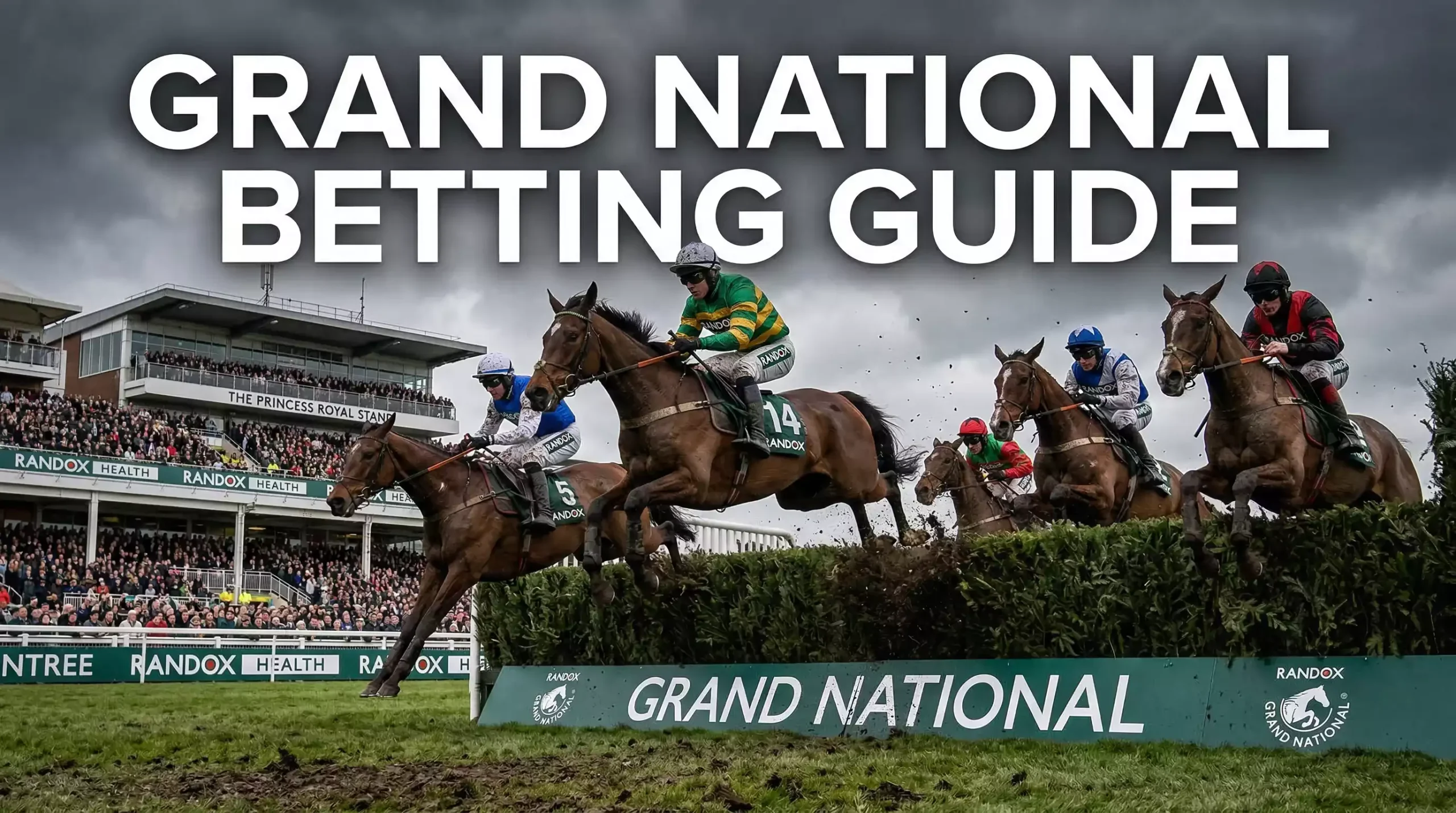
The Grand National stands apart from every other race in the British calendar. Run over four miles and two furlongs at Aintree, featuring up to 40 runners tackling 30 fences, this is the nation’s race. Once a year, millions of people who never normally bet find themselves studying form, picking names, and placing wagers on the world’s most famous steeplechase.
What makes Grand National betting distinctive extends beyond the spectacle. The race offers unique place terms, attracts special offers from every major bookmaker, and creates betting patterns unlike any other event. Understanding these nuances can mean the difference between a successful punt and a disappointing near miss.
The scale of Grand National betting dwarfs other racing events. According to Entain data, the race generates 700% more betting activity than its nearest rival, the Cheltenham Gold Cup. Expected betting turnover for 2025 exceeds £200 million on the race alone, with the entire Aintree Festival generating over £250 million. These figures explain why bookmakers compete fiercely for Grand National business with enhanced offers and special terms.
Grand National Betting Guide — More on this topic at horse racing bet calculator.
Grand National Place Terms
Standard each way terms for the Grand National typically pay four places at 1/5 odds. With a maximum field of 40 runners, bookmakers extend place terms beyond the usual three places offered in smaller fields. The 1/5 odds represent slightly less generous place returns than the 1/4 odds offered in many handicaps, but the additional places compensate.
The four-place standard applies at most bookmakers before any enhanced offers. Your place bet wins if your selection finishes first, second, third, or fourth. At 1/5 odds, a horse at 20/1 pays 4/1 for placing. A £10 each way bet on a 20/1 shot finishing fourth returns £10 stake plus £40 profit on the place portion, with the £10 win stake lost.
Field size directly influences these terms. If withdrawals reduce the Grand National field below sixteen runners, some bookmakers revert to standard place terms for the reduced field size. A field of 12-15 runners typically pays three places. Fewer than 12 may pay only two. Always check current terms close to race time after final declarations.
The large field and extended place terms make each way betting particularly attractive for the Grand National. With 40 potential runners and four paying places, backing an outsider each way offers genuine value. A horse at 33/1 finishing fourth delivers solid returns despite not winning, making each way the default approach for many Grand National punters.
Extra Places Offers
Bookmakers compete aggressively for Grand National business, with extra places representing the primary battleground. Standard terms pay four places, but promotional offers frequently extend this to six, seven, or even eight places. These enhanced terms significantly increase your chances of an each way return.
Extra places offers typically appear in the weeks before the race and intensify as race day approaches. Some bookmakers offer six places as standard for the Grand National. Others require you to opt in to promotions or place your bet through specific channels. Check each bookmaker’s terms carefully, as conditions vary.
The value of extra places compounds with field size. In a 40-runner field, moving from four places to six places increases your place probability by roughly 50%. At outsider odds, this enhancement can transform marginal each way value into genuine opportunity. A 40/1 shot finishing sixth pays nothing under standard terms but delivers 8/1 place returns with six-place offers.
Comparing bookmaker offers before placing your Grand National bet makes practical sense. The same selection at the same odds might pay four places with one bookmaker and six places with another. This difference means nothing if your horse wins but represents significant value if your selection finishes fifth or sixth.
Each Way Strategy for GN
Each way betting dominates Grand National wagering for good reason. The race’s unpredictability, large field, and extended place terms combine to make each way approaches more attractive than win-only bets for most punters.
The four-mile distance and 30 fences create natural attrition. Horses fall, refuse, or tire. Favourites regularly fail to complete. In this environment, backing outsiders each way offers genuine value. A horse need not be the best in the race to finish in the places; it needs jumping ability, stamina, and fortune. These qualities do not always correlate with market position.
Consider the mathematics of each way betting at Grand National odds. A £10 each way bet on a 25/1 shot costs £20 total. If the horse wins, you collect £260 (win portion) plus £60 (place portion at 5/1) for £320 total return. If the horse places without winning, you collect £60 from your place bet while losing your £10 win stake, netting £40 profit. The place returns alone justify the each way approach at these prices.
Multiple each way selections spread your risk across the large field. Rather than staking £40 on one horse to win, four £5 each way bets cover different profiles: a front-runner, a hold-up horse, an Irish raider, and a young improver. If one places, you recover stake. If one wins, you celebrate.
Ante-Post vs Day Betting
Ante-post betting on the Grand National opens months before the race, offering potentially longer odds than morning prices on race day. However, ante-post bets carry risks that day betting avoids, most notably the loss of stake if your selection does not run.
Non-runners represent the primary ante-post danger. Horses can be withdrawn for injury, illness, or simply failing to meet entry criteria. Standard ante-post rules mean you lose your stake if your horse does not run. No Rule 4 deductions apply because no race has taken place for your selection.
Non-Runner No Bet offers provide protection. Many bookmakers extend NRNB terms for major races like the Grand National, refunding your stake if your selection withdraws before the race. These offers may come with restrictions: slightly shorter odds, maximum stakes, or limited availability. The protection often justifies these compromises for ante-post punters.
Day betting eliminates non-runner risk entirely. By race morning, the final field is declared. Your selection will definitely run. You accept shorter odds in exchange for certainty. For punters who dislike the ante-post guessing game, waiting until declarations makes practical sense.
Early odds often prove better value than race day prices. A horse attracting strong support might drift in ante-post markets but shorten dramatically once declarations confirm it will run. Identifying these situations requires judgement and racing knowledge that our calculator supports with precise return projections.
Using the Calculator for GN
Our betting calculator handles Grand National scenarios with specific attention to the race’s unique characteristics. Enter your selection’s odds, stake, and applicable place terms to see exact returns for both win and place outcomes.
Standard calculations use four places at 1/5 odds unless you specify otherwise. If your bookmaker offers enhanced terms, adjust the places paid and place fraction accordingly. Six places at 1/5 odds produces different returns than four places at 1/4 odds, and our calculator reflects these differences precisely.
Each way calculations show separate breakdowns for win and place portions. You see exactly what winning delivers, what placing without winning returns, and what different finishing positions mean for your stake. This clarity helps when comparing bookmaker offers with different place terms.
For accumulator bets involving the Grand National alongside other races, the calculator applies each race’s specific terms. A Grand National selection with four places combines correctly with a Topham Chase selection paying three places. The mathematics adjusts automatically across your entire bet structure.
Consider running multiple calculations before finalising your Grand National bet. Compare returns at current odds against potential movement. Model different stake allocations across multiple selections. The calculator helps you find the approach that matches your budget, risk tolerance, and Grand National ambitions.
See also Cheltenham Festival Betting.
