
 Available in US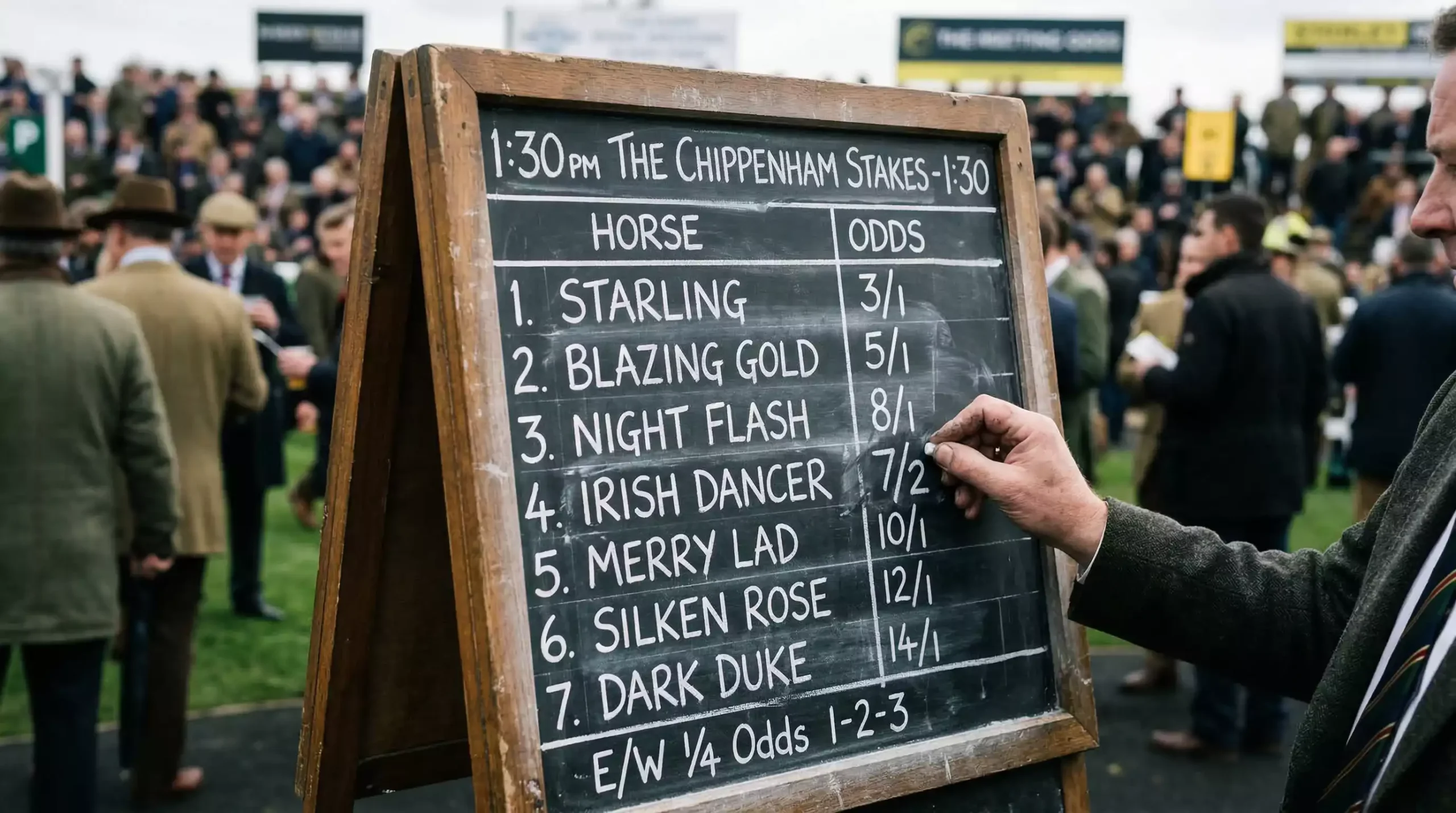
Overround represents the bookmaker’s edge, the mathematical advantage built into every betting market. When you add up the implied probabilities of all runners in a race, the total exceeds 100%. This excess is the overround, also called the vig, juice, or margin. It ensures bookmakers profit regardless of which horse wins.
Understanding overround helps you assess market competitiveness and identify value opportunities. Lower overround means better odds for punters. Higher overround means bookmakers take a larger slice. Comparing overround across operators reveals who offers the most competitive pricing.
The Gambling Commission reports total UK gambling gross gaming yield of £15.6 billion annually, while the Horserace Betting Levy Board confirms record Levy returns of £109 million. These substantial figures derive partly from overround. Every bet placed contributes to bookmaker revenues through the margin built into the odds. Recognising this reality helps you approach betting with clear-eyed understanding of the mathematical landscape.
Overround Explained — More on this topic at horse racing bet calculator.
What Is Overround
In a fair market with no bookmaker margin, implied probabilities sum to exactly 100%. If two horses have genuine 50% chances each, fair odds would be evens (2.0 decimal) on both. Adding 50% + 50% = 100%, confirming no excess. This theoretical fair market never exists in practice because bookmakers need profit margin to operate.
Bookmakers cannot profit from fair markets, so they adjust odds to create overround. Instead of evens on both horses, they might offer 10/11 (1.91 decimal) on each. The implied probability of 10/11 is approximately 52.4%. Adding both: 52.4% + 52.4% = 104.8%. The 4.8% excess is the overround, representing the bookmaker’s theoretical profit margin.
This excess guarantees bookmaker profit when bets are balanced. If punters stake equally on both horses, the bookmaker pays out less than they collected because the odds are shorter than fair value. Over thousands of bets, this mathematical edge compounds into substantial revenue that funds operations, marketing, and profit.
Overround varies between markets and operators. Competitive markets with sophisticated punters tend to have lower overround because bookmakers must offer attractive prices to win business. Less liquid markets or those attracting casual bettors may carry higher margins. Feature races typically offer tighter pricing than minor events because of greater competition and scrutiny.
The concept explains why long-term profitable betting is difficult. Overround means you must overcome a built-in disadvantage on every bet. Only by identifying situations where your probability assessment significantly exceeds the bookmaker’s can you find genuine value that overcomes the margin and produces positive expected returns over time.
Calculating Overround
Convert each selection’s odds to implied probability, then sum all probabilities. The total minus 100% equals the overround percentage.
For fractional odds, implied probability = denominator / (numerator + denominator). For 5/1: 1 / (5+1) = 16.67%. For 3/1: 1 / (3+1) = 25%. For evens: 1 / (1+1) = 50%.
For decimal odds, implied probability = 1 / decimal odds. For 6.0: 1/6 = 16.67%. For 4.0: 1/4 = 25%. For 2.0: 1/2 = 50%.
Example calculation: A five-horse race offers 2/1, 3/1, 5/1, 8/1, and 12/1. Converting: 33.3% + 25% + 16.7% + 11.1% + 7.7% = 93.8%. This totals under 100%, which appears unusual for a bookmaker market. Using decimal conversion: 3.0, 4.0, 6.0, 9.0, 13.0 giving 33.3% + 25% + 16.7% + 11.1% + 7.7% = 93.8%. Typically bookmaker markets exceed 100%, so this example is unrealistic. A realistic market might price these horses at shorter odds, producing totals of 105-115%.
Realistic example: Odds of 6/4, 7/2, 5/1, 8/1, and 16/1 produce: 40% + 22.2% + 16.7% + 11.1% + 5.9% = 95.9%. Still under 100%, suggesting competitive pricing. More commonly, you see totals of 105% to 120% depending on market and operator.
To calculate overround quickly: sum implied probabilities and subtract 100. If the sum is 112%, the overround is 12%.
Comparing Bookmaker Margins
Different bookmakers apply different margins to the same race. Comparing overround reveals which operator offers the most competitive overall pricing. Lower overround generally means better value, though individual selection prices matter too.
Calculate overround for the same race across multiple bookmakers. One might price the market at 108% while another sits at 112%. The 4% difference represents meaningful value over time, particularly for punters placing many bets.
Feature races typically carry lower margins. The Grand National, Cheltenham Festival races, and Royal Ascot features attract competitive pricing because bookmakers compete for high-volume betting. Minor midweek handicaps may carry higher margins because less scrutiny exists.
Ante-post markets often show higher overround. The uncertainty over final runners and greater bookmaker risk justifies wider margins. As race day approaches and the market matures, overround typically decreases.
Online operators generally offer lower margins than high-street shops. Digital efficiency and competitive pressure drive tighter pricing online. Traditional betting shops may maintain higher margins due to overhead costs and different customer expectations.
Exchange markets approach true probability more closely. Without a built-in bookmaker margin, exchange odds reflect genuine market sentiment. Commission on winning bets replaces overround as the operator’s revenue source.
Finding Value Despite Overround
Value exists when your assessed probability exceeds the bookmaker’s implied probability by enough to overcome the margin. In a market with 10% overround, you need edges greater than 10% to achieve positive expected value on average.
Focus on specific selections rather than entire markets. Overround distributes unevenly across runners. A bookmaker might price the favourite accurately while overpricing outsiders, or vice versa. Identifying where the margin concentrates helps locate value opportunities.
Best odds comparison captures value across operators. If one bookmaker offers 5/1 while others offer 4/1, taking the best price overcomes some margin. Systematic best-odds shopping accumulates significant value over many bets.
Promotions and enhanced odds create artificial value. Free bets, money-back offers, and price boosts temporarily shift expected value toward punters. These promotions effectively reduce or eliminate the margin on specific bets.
Specialisation improves edge identification. Deep knowledge of particular trainers, tracks, or race types helps you assess probabilities more accurately than generalist bookmakers. Your expertise creates opportunities to identify mispricings that overcome the standard margin.
Exchange vs Bookmaker Margins
Betting exchanges like Betfair operate without traditional overround. Users back and lay against each other at odds they choose. The exchange takes commission on net winnings rather than building margin into odds. This fundamental difference creates tighter pricing.
Exchange markets on liquid races often show implied probability totals near 100%. A competitive horse race might sum to 101% or 102% rather than the 110% common at traditional bookmakers. This 8-9% difference represents substantial value for punters.
Commission replaces overround as the exchange’s revenue model. Betfair charges approximately 5% commission on net winnings by default, with rates decreasing for high-volume customers. This commission affects your returns but applies only to winning bets, unlike overround which affects the odds themselves.
The combination of tighter odds and commission often beats bookmaker pricing. Even after paying 5% commission, exchange odds frequently deliver better returns than equivalent bookmaker prices. The mathematics favour exchanges for many bet types.
Liquidity limits exchange advantages on smaller races. Popular markets like the Grand National offer deep liquidity and tight pricing. Minor midweek races may have limited activity and wider spreads between back and lay prices, reducing or eliminating the exchange advantage.
Understanding both models helps you choose the best platform for each bet. Compare exchange prices (including commission) against bookmaker odds to find optimal value.
See also Win Bet Calculator.
